Things to do in South Park, San Diego: Old Streetcar Streets and Balboa Park
A plain guide to South Park's historic homes, quiet canyon, walkable streets and its place beside Balboa Park, for visitors and neighbors.
8 Oct 2026
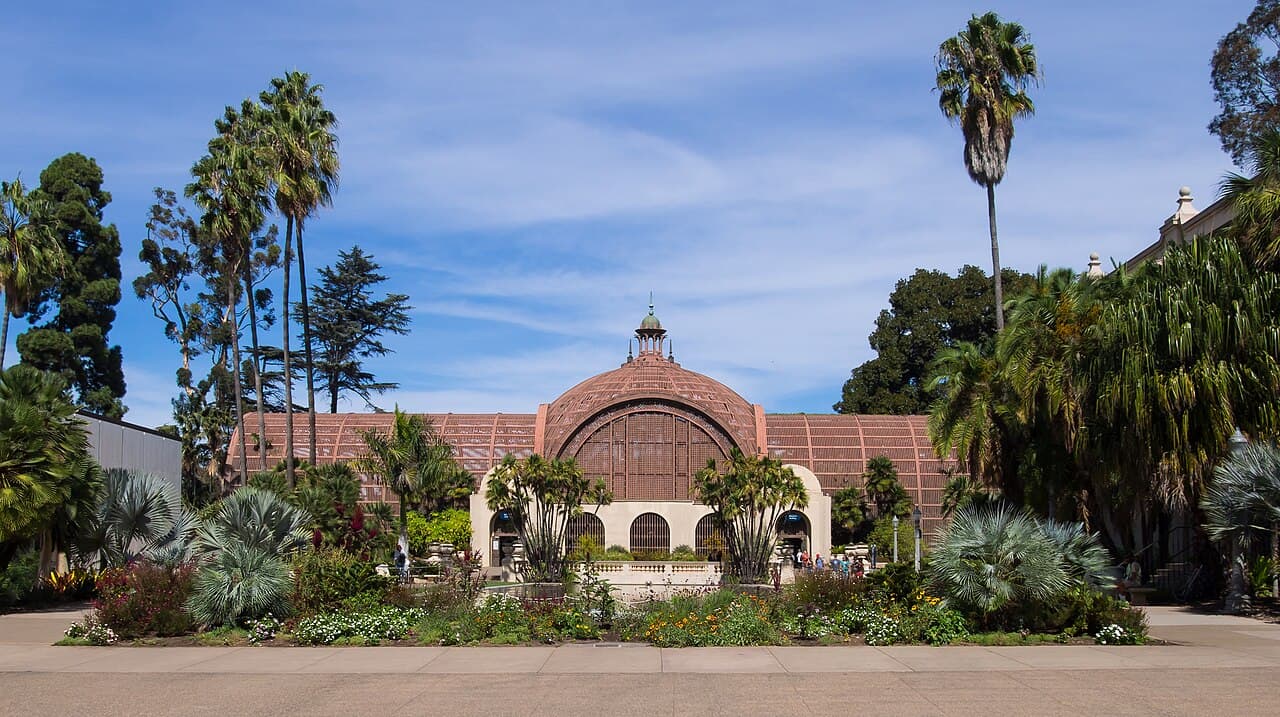
South Park is a small neighborhood on the southeast side of Balboa Park, in San Diego. It is known for tree lined streets, older homes and a main strip you can cover on foot. It does not have big attractions of its own. What it has is a calm, human scale, and a very good neighbor next door.
This guide is honest about that. It covers what South Park offers itself, then points to larger places nearby that have been around for years and are likely to stay.
A neighborhood built for the streetcar
South Park's story starts in 1870, when the land was first registered as a subdivision. It sat too far from downtown to attract many builders. That changed in 1905, when a developer named E. Bartlett Webster bought it. An electric streetcar line opened in 1906 and carried people to downtown. That made South Park the city's first streetcar suburb.
The streetcars ran until 1949, when a bus took over the route. You can still feel the old plan today. Streets are short, shops are close to homes, and most things sit within an easy walk.
Houses to look at
The homes are the main reason to visit. South Park has Craftsman and Spanish Colonial Revival houses built between 1905 and 1930. Some were designed by well known San Diego architects, including Irving Gill, William S. Hebbard and Richard Requa. The area also has bungalow courts, which are small groups of cottages built around a shared yard.
In 2017 the city named the original South Park subdivision a historic district. A slow walk along the residential streets is the best way to enjoy it. Please stay on the sidewalks and respect that people live in these homes.
Outdoors
Balboa Park touches the western edge of South Park, along 28th Street. It covers about 1,200 acres and has more than 15 museums, gardens, a famous zoo and Spanish Colonial Revival buildings left from two big world fairs, the 1915 and 1935 expositions. The whole park is a National Historic Landmark District. The Botanical Building, finished in 1915, was the largest wood lath structure in the world when it opened. The Spreckels Organ Pavilion has one of the largest outdoor pipe organs anywhere.
Switzer Canyon is South Park's quieter green space. It runs along the border with North Park and is an open space preserve that the city bought in 1987. It has two walking trails and three places to start a walk. The canyon is named for E. D. Switzer, who farmed five acres there in the 1800s. A group called Friends of Switzer Canyon formed in 1998 to protect it, and the group became a model for other canyon groups around the county.
South Park also has a neighborhood dog park on Grape Street. It is one of the few dog parks set right next to homes. If you are walking with a dog, it is a handy stop. Always check posted rules.
For families
Balboa Park is the easy answer. Open lawns, gardens, museums and the zoo give children plenty of room to run and explore. Within the park you can pick one museum for a morning and a garden for a picnic.
Back in the neighborhood, a walk to look at the old houses can turn into a game. Ask kids to spot the tallest roof or the widest porch.
When the weather turns
When it rains, Balboa Park's museums are the obvious indoor plan, and they sit right beside South Park. Check each museum's own website for current exhibits and visiting information.
A short drive away
South Park is close to the middle of San Diego, so a lot is within reach.
Old Town San Diego State Historic Park preserves the early story of the city, from the Spanish mission days through Mexican rule to American statehood. It has restored historic buildings, five original adobe structures and a working blacksmith shop. It is on the ancestral land of the Kumeyaay.
Cabrillo National Monument, at the end of the Point Loma peninsula, marks the 1542 arrival of Juan Rodriguez Cabrillo. It has the Old Point Loma Lighthouse, tide pools and coastal trails, with views of San Diego and Coronado.
Getting around
South Park is a walking neighborhood. The main business streets are 30th Street and Fern Street, and the center of it all is around Fern and Grape streets. The neighborhood is bounded by 28th Street at Balboa Park on the west, Juniper Street on the north and A Street on the south.
Walking is the best way to see it.
Good to know
South Park is small. Plan a few hours, not a full day.
Switzer Canyon is a nature area. Stay on trails and take out what you bring.
Dogs have a dedicated park on Grape Street. Follow the posted rules there.
Balboa Park is very large. Choose a couple of spots, not all of it.
Check each park, museum or site's own website for current details before you go.
Find local businesses
Planning a visit, or live nearby and need a hand with something? Browse the local businesses listed in the San Diego guide to find who serves South Park and the neighborhoods around it.
Useful links
About South Park: the town at a glance
Own a business in South Park? Claim or add your listing, free
By Thomas Hassett and Eric Andrews, Local Business America
Photo: Rhododendrites, CC BY-SA 4.0, via Wikimedia Commons.
Sources: Wikipedia, "South Park, San Diego" (https://en.wikipedia.org/wiki/South_Park,_San_Diego); Wikipedia, "Switzer Canyon" (https://en.wikipedia.org/wiki/Switzer_Canyon); Wikipedia, "Balboa Park (San Diego)" (https://en.wikipedia.org/wiki/Balboa_Park_(San_Diego)); California State Parks, "Old Town San Diego State Historic Park" (https://www.parks.ca.gov/?page_id=663); National Park Service, "Cabrillo National Monument" (https://www.nps.gov/cabr/index.htm). Wikipedia text is available under CC BY-SA.